- All
- Product Name
- Product Keyword
- Product Model
- Product Summary
- Product Description
- Multi Field Search

Views: 0 Author: Site Editor Publish Time: 2026-02-25 Origin: Site


A Shaker Door is known for its clean frame-and-panel look, which makes it a popular interior door choice in modern, transitional, and minimalist spaces. When buyers begin comparing finish options—painted, veneered, laminate, or wrapped surfaces—thermofoil often becomes part of the discussion because it delivers a smooth, uniform factory finish that can remain consistent across large production runs. While thermofoil is most frequently associated with cabinet doors, many homeowners and project planners ask the same question for interior applications: can a Shaker Door be thermofoil, and is it a practical solution for everyday use? The short answer is yes—Shaker-style profiles can be manufactured with a thermofoil finish—but the more complete answer depends on factors such as door design, substrate stability, edge construction, installation environment, and expected wear. Understanding how thermofoil Shaker doors are produced, where they perform best, and what limitations to consider will help you determine whether this finish is the right choice for your interior door project.
Thermofoil is a manufacturing finish where a thin PVC-based film is heated and vacuum-formed over a stable substrate, most commonly MDF or a composite panel. The film is bonded with adhesives under heat and pressure so the surface becomes uniform and sealed. For an interior door, this can create a consistent color and sheen without brush marks, roller texture, or the variability that sometimes comes with painted finishes.
Because thermofoil is applied in a controlled factory process, it can produce a clean, “one-finish” appearance that’s attractive for projects needing predictable results—such as multi-unit developments, rentals, or homes where owners want a low-maintenance interior door finish.
A Shaker Door profile generally works well with thermofoil when the design is simple and the recess details are not excessively sharp or deep. Thermofoil needs gentle transitions and consistent radii to wrap smoothly without thinning, tearing, or bridging at corners. If a Shaker interior door has extremely crisp, knife-like inside corners or very deep panel steps, the film may be more stressed at those points, increasing the chance of edge lift over time.
In practical terms: thermofoil Shaker doors tend to perform best when the Shaker geometry is clean and moderate—classic frame widths, controlled panel recess depth, and carefully designed corners that support wrapping.
The substrate is the foundation of thermofoil performance. MDF is widely used because it’s smooth, stable, and easy to machine into precise Shaker details. That stability matters for an interior door because movement and warping can stress the film, especially near edges and corners where adhesion is most vulnerable.
Some thermofoil Shaker interior doors may use engineered cores or composite structures to improve rigidity, weight, or sound feel. A heavier, more stable construction typically feels more “solid” and can improve the closing experience compared with lightweight doors, but quality depends on how the door is built overall—not only the finish.
In the thermofoil process, the film is heated until it becomes flexible, then it is vacuum-formed over the door face (and often around edges) and bonded with adhesives. The goal is to create a continuous surface that resists moisture and is easy to wipe clean. For interior doors, edge handling is critical: edges take the most contact from hands, rings, cleaning, and accidental impacts.
Not all thermofoil products wrap the same way. Some use a more continuous wrap approach, while others may have seams or transitions at certain edges. The cleaner the edge work—tight corners, smooth recess wraps, and minimal seam visibility—the better the door will look and the lower the long-term risk of peeling.
Thermofoil can be an excellent option when you want a uniform, factory-consistent finish. It eliminates common paint issues such as brush marks, roller stipple, and inconsistent sheen between doors. For interior door packages across bedrooms, closets, and hallways, thermofoil can keep the look consistent from door to door.
Thermofoil surfaces are also easy to clean. In many everyday interior settings, they handle light wiping well and can resist minor moisture exposure better than some paint systems, particularly when owners aren’t careful about ventilation or routine cleaning.
The biggest concern with thermofoil is vulnerability to heat and edge stress. Prolonged heat exposure—strong direct sunlight on a door surface, high temperatures near vents, or localized heat sources—can weaken adhesives and increase the chance of delamination. While this is more common in cabinet applications near ovens, interior doors placed near heat registers or sun-baked glass can still be affected.
Another limitation is refinishing. If you later want a new color, thermofoil is harder to repaint reliably compared with a paint-grade Shaker Door. You can’t simply sand and repaint the way you would with wood or MDF paint-grade doors, and repairs to peeling film are often visible if not handled professionally.
Thermofoil Shaker doors often make the most sense for low-to-moderate wear interior spaces where you want clean looks and easy maintenance. Bedrooms, closets, hallways, and rental properties are common use cases because the finish stays consistent and routine cleaning is simple. They can also be practical for light commercial interiors where large quantities of doors must match perfectly.
If the priority is an interior door finish that looks uniform across many rooms—without the variability of on-site painting—thermofoil can be a strong contender.
Use more caution in locations with higher heat exposure or intense sunlight. Interior doors near large south-facing windows, sunrooms, or strong HVAC registers may experience more thermal stress over time. Also consider edge durability in high-abuse areas—kids’ rooms, pet-heavy households, or tight hallways where doors get bumped frequently. Thermofoil can look great, but it is less forgiving of sharp impacts than some painted wood systems.
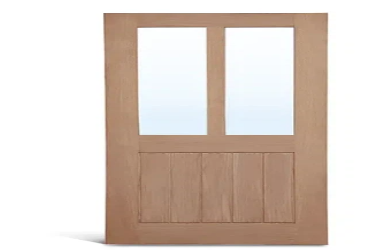
A good thermofoil Shaker Door should have clean corners, tight wrap transitions in the recessed panel, and smooth edges without visible lifting. Look closely at the inside corners of the Shaker recess—wrinkles, thinning, or uneven stretching can signal weaknesses. The surface should feel consistent and not “soft” at edges, which can indicate poor bonding.
Thicker, higher-quality films and stable substrates generally perform better. While you may not see film thickness easily, you can often judge overall quality by seam cleanliness and how well the wrap conforms to the Shaker profile.
Ask about warranty coverage, specifically for peeling, bubbling, and delamination. Also ask what cleaning products are recommended—harsh solvents can damage some films. Finally, request guidance on temperature exposure limits and ideal installation environments. A supplier who can answer these clearly is more likely to offer a thermofoil interior door product designed for real-world durability.
Minor chips may be disguised with color-matched repair kits, but peeling or edge lift is harder to fix invisibly. Larger failures often require professional repair or replacing the door face/door.
Quality thermofoil is designed for color stability, but long-term exposure to strong sunlight can contribute to fading or slight color shifts. Placement away from harsh direct sun helps preserve appearance.
It’s possible but not as straightforward as repainting wood. It typically requires specialized prep, bonding primers, and careful testing for adhesion. Many people choose replacement or re-skinning instead.
They serve different needs. Thermofoil provides a seamless wrapped look and smooth cleaning, while laminates can offer strong wear resistance and texture options. The better choice depends on traffic level, heat exposure, and the exact product quality.
 Conclusion
 Thermofoil isn’t limited to cabinet fronts—a Shaker Door can absolutely be made with a thermofoil finish, and it can be a smart interior door option when you want a uniform, factory-smooth surface that’s easy to clean and consistent across multiple rooms. The key is choosing a Shaker profile that wraps cleanly (with sensible corner radii and moderate recess depth), confirming a stable, high-quality substrate, and paying close attention to edge treatment and seam quality—because edges are where long-term performance is won or lost. It’s also important to avoid placements with constant heat, strong direct sunlight, or repeated hard impacts, as these conditions can increase the risk of lifting or peeling over time. If you want the most flexibility for future color changes, paint-grade Shaker interior doors are typically easier to refinish; but if your priority is a consistent, low-maintenance look with minimal on-site finishing, thermofoil Shaker doors remain a practical, modern solution for both residential and light commercial interiors.