- All
- Product Name
- Product Keyword
- Product Model
- Product Summary
- Product Description
- Multi Field Search

Views: 0 Author: Site Editor Publish Time: 2026-02-25 Origin: Site


Building a Shaker Door is one of the most satisfying DIY upgrades you can make for a home or small project because the design is clean, repeatable, and forgiving enough for careful beginners—yet refined enough to look professional. A Shaker Door also fits almost any interior door style plan: modern, transitional, farmhouse, and minimalist interiors all benefit from its straight lines and balanced proportions. When you build your own door, you gain control over sizing, materials, panel layout, and finish quality, which can be especially valuable for older homes with non-standard openings.
That said, an interior door needs to be more than “pretty.” It must stay flat, swing smoothly, and hold up to daily use. This guide explains how to build a Shaker Door step by step—from planning and material selection to joinery, assembly, finishing, and installation—so your final interior door looks sharp and performs reliably.
Start by deciding whether you are building a door slab (just the door) or a prehung unit (door + frame). For most DIY projects, a slab replacement is simpler if the existing frame is square and in good condition. Measure the door opening carefully: record height, width, and thickness of the existing interior door, and confirm hinge locations and handing (left-hand or right-hand swing). If you’re building for an existing jamb, matching the original thickness and hinge positions saves hours of adjustment later.
Next, decide the Shaker layout. A one-panel Shaker Door feels modern and clean, while multi-panel layouts can look more traditional. Keep proportions consistent: overly narrow stiles can look flimsy, while overly wide rails can feel heavy. If you’re unsure, copy the proportions of a door style you like and adjust only when you understand how it affects the overall look.
Material choice is the difference between a door that lasts and one that warps. For paint-grade Shaker Doors, MDF panels with solid wood stiles/rails can produce smooth surfaces, but you must seal edges well. For stain-grade work, solid wood or veneered engineered panels are common. The center panel is usually floating in a groove so it can expand and contract without cracking the frame.
Use the table below as a quick guide to common Shaker interior door material choices:
Component | Common Options | Best For | Notes |
Stiles & rails (frame) | Poplar, pine, maple, oak, engineered lumber | Most DIY builds | Choose straight, stable stock; avoid twist/cup |
Center panel | MDF, plywood, solid wood panel, veneered panel | Paint-grade (MDF), stain-grade (veneer/solid) | Panels usually float in grooves |
Door core (optional) | Solid core insert, engineered core | Heavier interior door feel | Adds weight + sound control |
Finish | Primer/paint, stain/topcoat | Paint or natural wood | Seal edges and end grain thoroughly |
You don’t need an industrial shop, but you do need accuracy. At minimum, you want straight cuts and repeatable joinery. A table saw or track saw helps you rip stiles and rails consistently. A router is useful for cutting grooves for the panel and for hinge mortises (or you can chisel hinges if you work carefully). Clamps are essential, because door glue-ups require even pressure to stay flat and square.
Accuracy tools matter just as much as power tools. A framing square, reliable tape measure, and a way to check diagonals (for squareness) will prevent the most common DIY interior door issues: racking, uneven reveals, and binding at the jamb.
Plan hardware before you cut wood. Match hinge size and count to the door’s weight, especially if you’re building a heavier Shaker Door. Standard interior doors often use two or three hinges depending on height and weight. You’ll also need a latch set or handle set, screws, wood glue, sandpaper, and filler for minor imperfections.
For finishing, use a primer compatible with your paint or topcoat. If you want a crisp Shaker look, your finishing system should level well and not leave heavy brush marks on the flat surfaces.
Door parts must be flat and consistent. If you have a jointer and planer, mill your stock to uniform thickness. If you don’t, buy pre-milled lumber and spend time selecting straight boards. Sight down each piece to reject twist, bow, or cup—warped stock is the fastest way to build a warped interior door.
Keep grain direction in mind. When possible, orient stiles and rails so the best faces are outward and the grain looks consistent across the door. For paint-grade builds, face quality still matters because dents and tear-out show through glossy finishes.
Cut stiles and rails to final length with square ends. Then cut grooves along the inside edges to receive the center panel. Groove depth and width depend on panel thickness; the goal is secure capture without forcing the panel tight. Leave a small clearance for seasonal movement. Label each piece (top rail, bottom rail, hinge stile, latch stile) to avoid mixing parts during assembly.
For a clean Shaker Door, avoid rounding edges too much. Slight easing for comfort is fine, but aggressive round-overs can make the door look soft and less “Shaker.”
Joinery is where strength comes from. Traditional mortise-and-tenon is extremely strong and ideal for long-term durability, but it requires careful layout and tooling. Loose tenons (using a slot mortiser or a router jig) can be nearly as strong and often faster. Dowels can work for interior doors if you use enough dowels per joint and maintain accurate alignment, but they are less forgiving if holes drift.
Choose joinery based on your tools and skill. A strong joint with perfect alignment beats an “advanced” joint executed poorly. Door corners must resist racking forces every time the door is opened.
For builders making multiple doors, a cope-and-stick router set can speed production by creating interlocking profiles. While classic cope-and-stick is more common in cabinet doors, some woodworkers adapt similar approaches for Shaker-style interior door frames. If you use router-based joinery, manage tear-out with sharp bits, correct feed direction, and test cuts on scrap until joints close tightly without gaps.
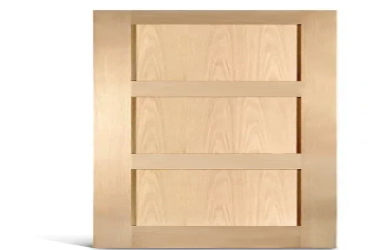
Always do a dry fit first. Assemble the Shaker Door without glue to confirm joints seat fully and the panel fits with slight movement. During glue-up, apply glue to the joinery surfaces—not to the center panel—so the panel can float. Use clamps evenly, check diagonals to confirm squareness, and correct any rack before the glue sets. Wipe squeeze-out early, especially if you plan a stain finish.
Let the assembly cure on a flat surface. If your workbench isn’t flat, use cauls or a known-straight reference to keep the door from taking a twist during curing.
Sand progressively to a smooth finish but keep Shaker edges crisp. Over-sanding corners rounds the clean geometry that makes a Shaker Door look sharp. For paint-grade doors, use a high-quality primer to seal end grain and MDF edges, then sand lightly for a smooth topcoat base. For stain-grade doors, test stain on offcuts to confirm color before applying to the entire interior door.
A durable topcoat matters for interior doors because hands and cleaning products wear finishes over time. Choose finishes designed for trim and doors rather than wall paint alone.
If you’re replacing an existing slab, match hinge positions precisely. Mark hinge locations, cut clean mortises (router or chisel), and test-fit hinges so they sit flush. Hang the door and check reveals: even gaps at the sides and top, and appropriate clearance at the bottom. A Shaker Door’s straight lines make uneven reveals easy to notice, so take time to get alignment right.
If the door binds, adjust carefully: minor planing on the hinge side or latch side can fix rub points. Make small changes and re-test often.
Install the latch and strike plate after the door swings properly. The latch should engage smoothly without forcing the door into the jamb. If the door rattles, consider felt pads or better stop alignment. Over time, seasonal movement may require minor hinge tightening or strike adjustments—normal for many interior doors. The best prevention is stable materials, good joinery, and a sealed finish on all edges, including top and bottom.
Many interior door slabs are commonly built at about 1 3/8 inch thickness, but you should match your existing jamb and hardware. If you change thickness, hinges and latch hardware may not fit correctly.
In most cases, leave it floating. A floating panel allows movement with humidity changes, reducing the chance of cracks, splits, or frame distortion.
Start with straight, stable stock, use strong joinery, clamp on a flat reference during glue-up, and seal every surface—especially edges and end grain. Proper hanging with quality hinges also reduces stress.
Yes, but it’s harder. You can use a circular saw with a guide for straight cuts and cut grooves with multiple passes or alternative methods, but accuracy becomes more challenging. If you lack key tools, consider building a simpler slab-style interior door or using pre-milled components.
Building a Shaker Door is a practical way to upgrade an interior door with a timeless style you can customize to your exact opening, layout, and finish. By planning measurements carefully, choosing stable materials, using reliable joinery, and taking time to assemble the frame square with a floating panel, you can create a door that looks clean and performs well for years. Finish all surfaces thoroughly, install with accurate hinge mortises and even reveals, and your DIY Shaker interior door will deliver the crisp lines and everyday durability that make this design so popular.