- All
- Product Name
- Product Keyword
- Product Model
- Product Summary
- Product Description
- Multi Field Search

Views: 0 Author: Site Editor Publish Time: 2026-02-25 Origin: Site


Shaker Door style has become one of the most trusted choices for an interior door because it strikes a rare balance: it feels refined and intentional, yet it never overwhelms the room. In a world of fast-changing trends, the simple geometry of a Shaker Door looks “right” in modern homes, transitional renovations, and even classic interiors where ornate profiles might feel outdated. That versatility is why designers often specify Shaker interior doors for whole-home packages—when the door design repeats across many rooms, clean lines help the home feel cohesive.
Another reason Shaker Door style stays relevant is how easily it adapts. Paint it white and pair it with matte black hardware for a modern look, or choose a warm wood tone with brushed metal to suit a more classic interior. If you’re wondering what is a shaker door style, the guide below explains its origins, defining features, common variations, material options, and how to recognize quality when choosing an interior door.
Shaker Door style is inspired by the Shaker communities known for craftsmanship and a design philosophy centered on function and simplicity. Their furniture and interior elements were built to last, emphasizing clean construction and honest materials rather than decorative excess. That practical approach—strong joinery, balanced proportions, minimal ornament—translated naturally to doors because doors must handle daily use while remaining visually consistent throughout a home.
While today’s Shaker Door is a modern interpretation, it still reflects the same values: an interior door that feels calm, purposeful, and durable. The style communicates quality without needing elaborate carving or heavy detailing.
A Shaker Door is most commonly recognized by its frame-and-panel look with a flat or recessed center panel. The frame consists of vertical stiles and horizontal rails that create a crisp rectangular border. Unlike raised-panel doors with decorative contours, Shaker Door style uses minimal profiling and sharp lines, producing a clean, architectural appearance.
This simplicity is exactly what makes the style so flexible. A Shaker interior door can blend into a minimalist space or support more layered design, acting as a structured backdrop that complements other materials and finishes.
The typical Shaker interior door is built with stiles and rails surrounding a center panel. The panel is often set slightly back to create a subtle shadow line, which adds depth without ornamentation. In quality construction, the panel is usually designed to “float” within grooves, allowing for seasonal movement in wood-based materials. This helps prevent warping, cracking, or joint failure over time.
From a practical perspective, frame-and-panel construction is also easier to repair and refinish than complex carved designs. If the door takes a hit or needs a color update, the flat planes and simple edges make sanding and repainting more manageable.
Proportion is a defining feature of Shaker Door style. The width of the stiles and rails is typically consistent and visually balanced so the door looks symmetrical and calm. This matters because interior doors repeat throughout the home; a design with good proportions feels stable and intentional every time you walk down a hallway.
The clean geometry also supports modern detailing choices. Shaker doors pair naturally with square trim, simple baseboards, and minimal casing profiles. Even in more traditional homes, the structured shape of a Shaker interior door can modernize the look without clashing with existing architecture.
Shaker Door style includes a range of panel layouts, and the panel configuration often determines whether the door feels more modern or more traditional. A one-panel Shaker Door is typically the most contemporary, offering a large, uninterrupted center panel with strong, simple framing. A two-panel Shaker interior door adds a bit more structure and can work well in transitional homes. Multi-panel versions can complement larger spaces or classic floor plans, where smaller panel divisions match the room’s scale.
Choosing panel layout isn’t just a style decision. Vertical emphasis can make spaces feel taller, while segmented panels can add rhythm in long corridors or larger homes. The key is consistency—mixing many panel layouts throughout one interior can feel chaotic unless it’s done intentionally.
Shaker Door style also appears in interior doors with glass inserts, including Shaker-inspired French doors and office doors that balance privacy with light. This option is popular for home workspaces, dining rooms, and living areas where you want a sense of separation without making the space feel closed off.
Modern adaptations may use slimmer frames or a shallower panel recess, creating a more minimalist interpretation while still reading as Shaker. Transitional versions may use slightly wider stiles and rails for a stronger, more classic presence. These variations allow the Shaker Door to work across many project types and aesthetics.
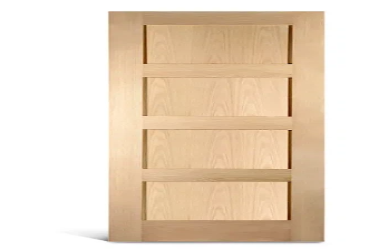
A major advantage of Shaker Door style is how well it integrates into different design themes. In modern interiors, it pairs with clean trim and bold hardware for a sleek look. In farmhouse or Scandinavian settings, it blends naturally with light woods and neutral palettes. In transitional interiors, it bridges modern simplicity and traditional warmth without pulling too strongly in either direction.
This versatility makes Shaker interior doors a “safe” decision for homes that might evolve over time. If you change wall colors, flooring, furniture, or lighting, the door style rarely needs to change because the design remains neutral and structured.
Shaker Door style has a reputation for being timeless because it avoids extremes. Decorative doors can date quickly, while ultra-minimal slab doors can feel too plain in some homes. A Shaker Door sits in the sweet spot: it has enough detail to look finished, but not so much detail that it becomes a period-specific statement.
It also adapts easily through refinishing. Many homeowners repaint interior doors during renovations, and Shaker doors handle repainting well because their surfaces are simple and their lines remain crisp when finished correctly.
Shaker interior doors are available in both solid wood and engineered constructions. Solid wood can offer a premium feel and natural grain, and it can often be refinished more easily. Engineered options—such as MDF skins over engineered cores—can provide consistent stability and a smooth paint-ready surface, which is valuable in humid climates or large projects where consistency matters.
When choosing, consider location and usage. Bedrooms and living spaces may prioritize feel and appearance. Closets or utility rooms may prioritize budget. If sound reduction is important, a denser core can improve the “solid” feel and reduce noise transfer compared to hollow options.
Shaker Door style is especially popular in paint-grade finishes because the flat planes showcase color cleanly. White and soft neutrals remain common for bright, modern interiors, while deeper colors can turn an interior door into a bold design feature. Stain-grade finishes highlight wood grain and can add warmth, especially in homes with natural flooring or wood accents.
For the best results, match finish to lifestyle. Painted doors are easy to refresh but can show scuffs in high-traffic areas. Stained doors hide minor marks better but may be harder to alter later. Either way, quality sealing on all edges supports long-term durability.
A quality Shaker Door shows precision in the details. Look for tight joints, consistent panel reveals, smooth surfaces, and crisp edges. The door should feel stable, not flimsy. Poorly built doors may show uneven gaps around the panel, rough edges, or twisting—issues that can create alignment problems once installed as an interior door.
Also consider the core type and weight. Many homeowners prefer the feel of a heavier interior door because it closes with a more solid sound and can perform better acoustically. Hardware compatibility matters too; quality hinges and proper installation help protect the door’s alignment over time.
To select the best Shaker interior door, start with the space: is it a bedroom, a bathroom, an office, or a closet? Consider privacy needs, sound expectations, and moisture exposure. Then choose the panel layout and finish that match the home’s design direction. Finally, align construction with budget and project scale—engineered options may deliver consistent performance for multi-door packages, while solid wood may be preferred for premium spaces.
If you’re sourcing multiple doors, consistency is key. Matching stile/rail proportions, panel depth, and finish across the home helps the interior feel unified, which is one reason Shaker Door style is so widely used in full-home specifications.
It’s both, depending on finish and proportions. Shaker Door style is rooted in traditional craftsmanship, but its clean lines make it feel modern in today’s interiors. Hardware and color choices often determine the final “direction.”
A slab door is typically a flat surface with little to no panel detailing, while a Shaker Door uses a frame-and-panel design with a recessed or defined center panel. The Shaker interior door adds depth and structure without heavy decoration.
They can support resale appeal because the style is widely accepted and rarely polarizing. A cohesive set of Shaker interior doors often makes a home feel updated and well-finished, which can improve buyer perception.
Yes. One-panel Shaker Doors are especially effective in smaller spaces because they keep the look clean and reduce visual clutter. Light paint finishes can also help small rooms feel brighter and more open.
Shaker Door style remains a top choice for an interior door because it combines clean, balanced design with real-world practicality. Defined by simple frame-and-panel construction and minimal ornamentation, a Shaker Door fits modern, transitional, and classic interiors while staying easy to update through paint, hardware, or finish changes. By selecting the right panel layout, materials, and construction quality for your space, you can achieve a cohesive look throughout the home and enjoy interior doors that feel timeless, durable, and relevant for years to come.